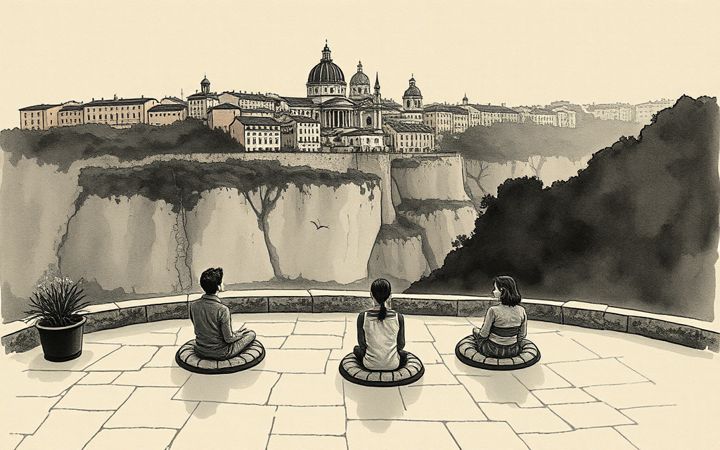
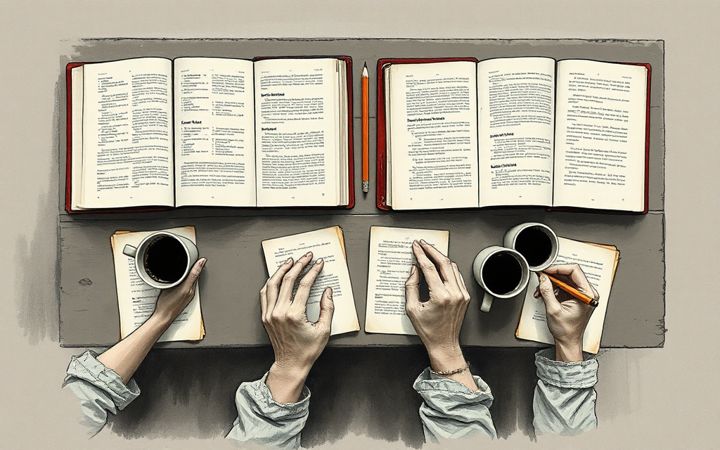
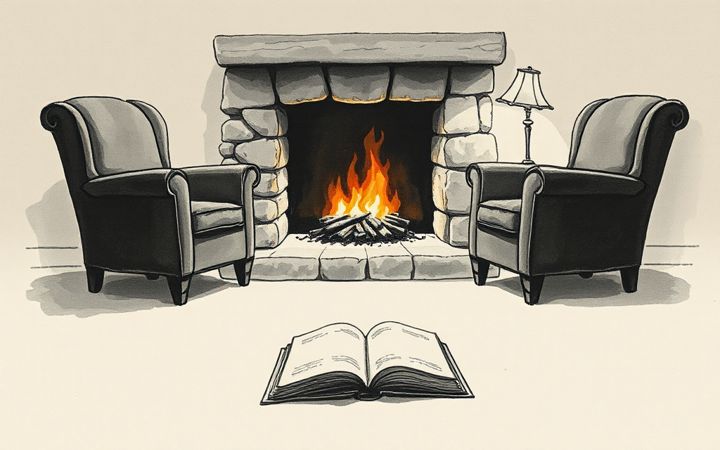
An intimate gathering of fifteen people for ten weeks, on how to live now in the age of rapidly evolving intelligences.

Ten weeks · ten questions

How to live
in the age of AI.

The God-device in your pocket writes your emails; it also plans your week; it likewise summarizes pretty much everything and still has time to keep you company at two in the morning when you're most lonely.

But have you noticed that AI never asks you what all that saved time is for? Nor where to draw the line about what should not be outsourced or summarized? Ours is much worse than a comfort crisis.
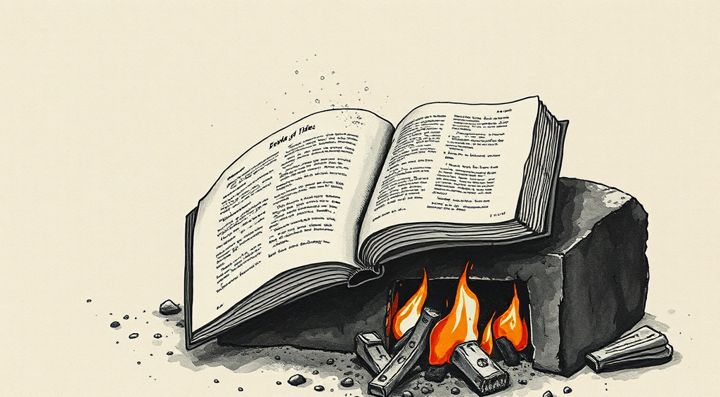
In this seminar, we will gather ’round for ten Monday nights and read the philosophers and writers who have thought hardest about the questions living in the Age of multiple intelligences raises. Then we will put the ideas into practice and share with each other what transpired.
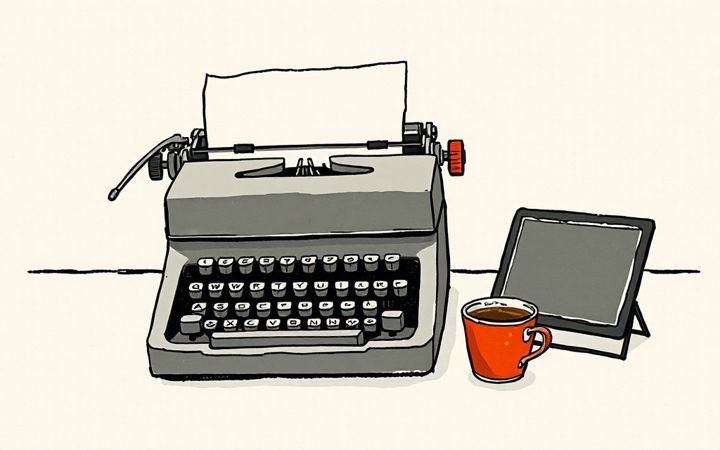
Yes: share—as fleshy, limited humans, for the good cheer that being with others provides and cannot be replaced.

Ten weeks · Jan 11 – Mar 21, 2027Mondays 7:00 pm Central · 8:00 pm Eastern · 5:00 pm Pacific · 2:00 am Tue in Rome · the readingSundays 2:00 pm Central · 3:00 pm Eastern · 12:00 noon Pacific · 9:00 pm in Rome · the reportLimited to 15 membersFirst week free

Every Monday session is recorded, so if you miss one you'll have the link to view it.

IThe flame · the question

The technology trap is older than AI and opens whenever anything promises to replace the difficult parts of your life.

Every week's readings address the seminar's one question: How to live now that a computer is seducing us with ease and comfort?

Many of these writers never even saw a computer, much less AI, but we will read the older thinkers because they thought hardest and most deeply about the costs of convenience and what thinking and philosophy are for, and these are the questions that AI today is making impossible to ignore.

These are five claims we will examine repeatedly:

What will you hand over, and what will you keep?
Attention is an ethical matterWhere your attention goes is where your values actually are, whatever you say they are.
Judgment takes years of workInformation arrives in seconds. Turning information into judgment means passing it through the workshop of finding out what matters to you, and cultivating that sense is an ongoing journey with better and worse methods; seminar-based inquiry is one of the best methods we have.
The friction is the workMost of what reading a hard book or developing a hard skill does to you happens in the moments that are hardest and most full of resistance.
Imagination keeps a life openPeople who can picture a life other than the one they're in are the ones who have the power to change it.
The danger is the bargainThe cost of convenience is forgoing the effort that shapes your character and makes you into who you ought to become.

Light becomes all that I grasp, coal all that I leave behind: flame I surely am.

Licht wird Alles, was ich fasse, / Kohle Alles, was ich lasse: / Flamme bin ich sicherlich!

Nietzsche

Seminar Overview

Ten Weeks: Investigating and Answering the Problems of Living in the Age of AI

IThe problem and the answer

Week 1 · Jan 11

What are the problems in the age of AI?

We hand over our thinking, our company, our time, our choices and our imagination.

On AI Each of the five handovers looks like a convenience until you count what it takes from you.

Chiang · Bloom · Burkeman · Zuboff · Zadie Smith · Solé

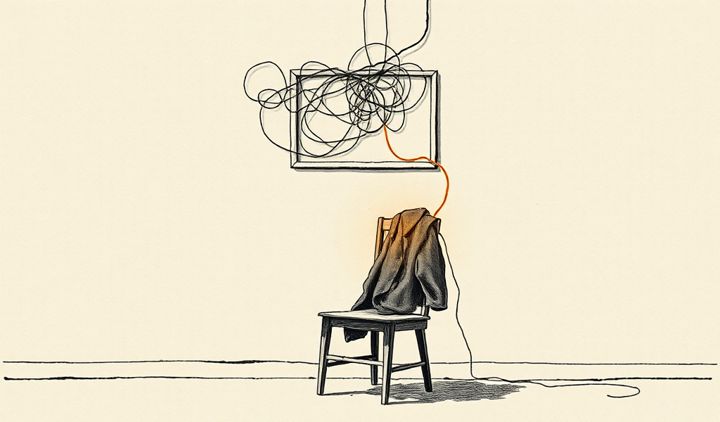
An empty chair with a coat on it; wires run from the chair up the wall and out of the frame
The problem
what we hand over → what we can take back, together
Week 2 · Jan 18

Why are philosophy and dialogue with others the answer?

Make thinking with people who can tell you you are wrong a daily practice.

On AI A chatbot agrees with you; Socrates’ partners could refute you, and that was the point.

Callard · Turkle · Hadot

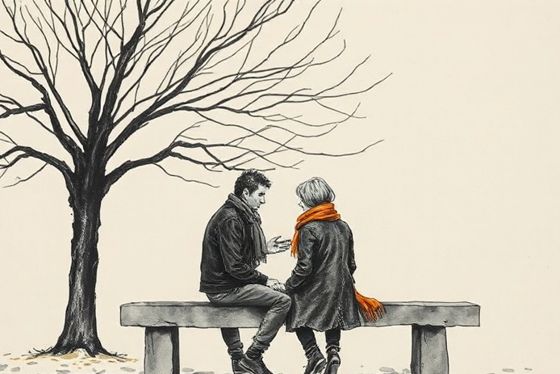
Two people on a stone bench under a bare tree, one asking a question with an open hand
Callard, Open Socrates
a way of life → what is it for?

IIThe self

Week 3 · Jan 25

What is worth wanting?

Difficulty, chosen and loved.

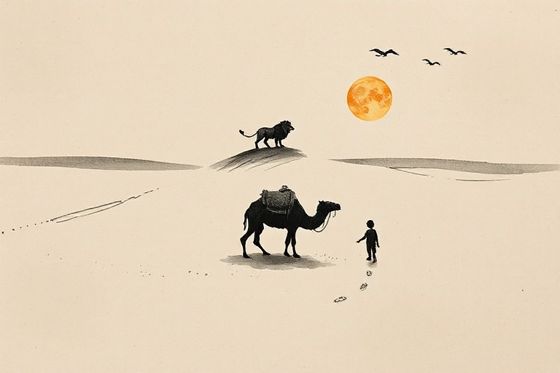
On AI Nietzsche’s camel kneels for its load, and the machine’s offer is to carry the load for you.

Nietzsche · Reginster · Free Solo

In a desert, a camel kneeling under a load, a lion on a dune above it and a child’s footprints leading away
Nietzsche, “The Three Metamorphoses”
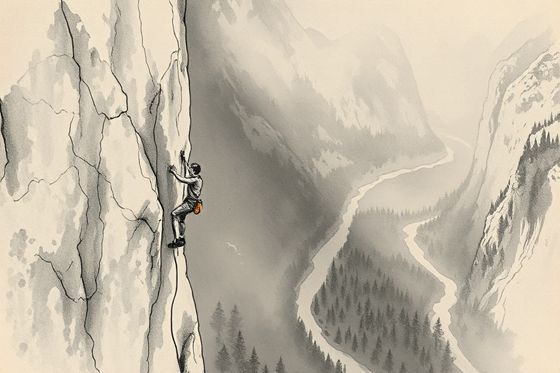
A lone climber with bare hands high on a granite arête above a forested valley and a winding river
Chin and Vasarhelyi, Free Solo
difficulty, chosen → who does the choosing?
Week 4 · Feb 1

Who chooses your life?

You do, even though the capitalistic world would rather choose it for you.

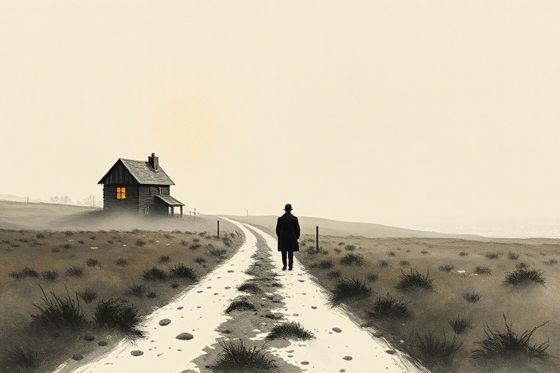
On AI Judge William’s warning holds: keep every option open, and the feed makes the choice.

Kierkegaard · Zuboff · The Truman Show

A man walking a forked path across a misty heath toward a lit farmhouse
Kierkegaard, Either/Or
the steered choice → the technology behind it

IIIThe world

Week 5 · Feb 8

What is technology doing to the world?

Use the devices without letting them use you.

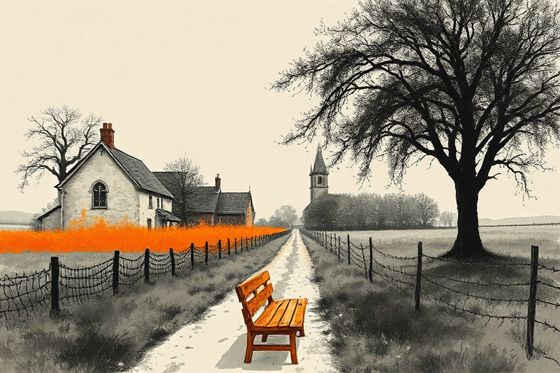
On AI Enframing, everything seen as a resource to optimize, now reaches your moods and your friendships.

Heidegger · Borgmann · the Zhuangzi

A country path toward a village church tower at dusk, a bench under an oak beside it
Heidegger, “Memorial Address”
the world as device → what a body knows
Week 6 · Feb 15

What does a body know that a computer doesn’t?

The body knows by doing and as of now, no computer has one.

On AI A model can describe a glass of water, but only a body has anything at stake in it.

Merleau-Ponty · Matthew Crawford · Berry

A woman typing with her eyes closed, a walking cane leaning by the desk
Merleau-Ponty, Phenomenology of Perception
a body lives by attention → where does yours go?

IVPractice

Week 7 · Feb 22

Where does your attention go?

Attention is yours to give, but it can easily be taken from you.

On AI The feed is built to take your attention at the exact moment you are bored.

Wallace · Smith · Berryman

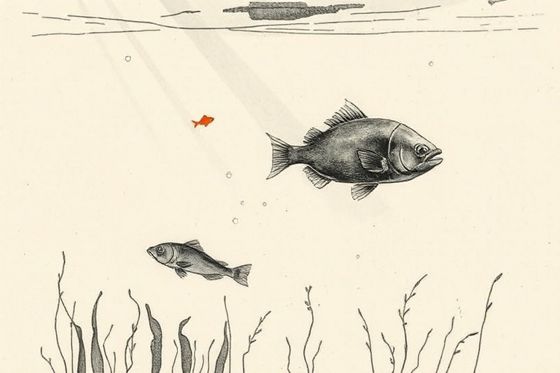
Two young fish swimming past an older fish in sunlit water
David Foster Wallace, “This Is Water”
attention through boredom → one thing for its own sake
Week 8 · Mar 1

Can you do one thing for its own sake?

Practice: sitting, looking, beginning again.

On AI The machine finishes tasks; Dōgen asks you to do one thing with nowhere else to get to.

Dōgen · Wright · Suzuki

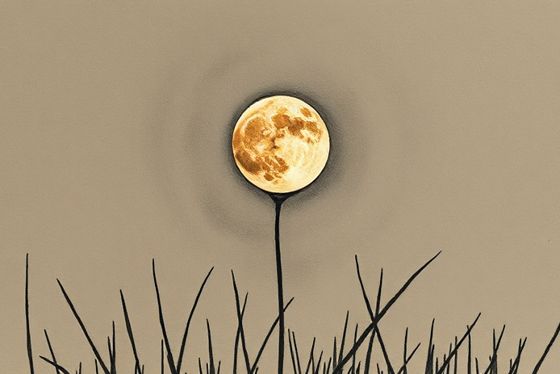
The full moon reflected inside a single dewdrop on a blade of grass
Dōgen, Genjōkōan
a practice → practices kept with others

VOthers, and the change

Week 9 · Mar 8

What can’t be calculated?

Judgment, and attention to another person.

On AI Machines retrieve and forget nothing, and judgment is the art of choosing what to forget.

Weil · MacIntyre · Critchley

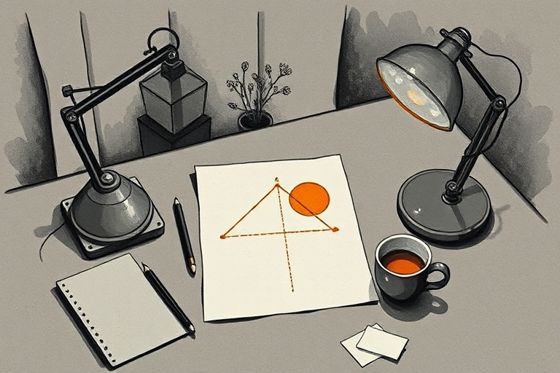
A student’s desk at night with an unfinished geometry drawing, a pencil and a lamp
Weil, “The Right Use of School Studies”
judgment and attention → the command to change
Week 10 · Mar 15

What will you change?

You must change your life.

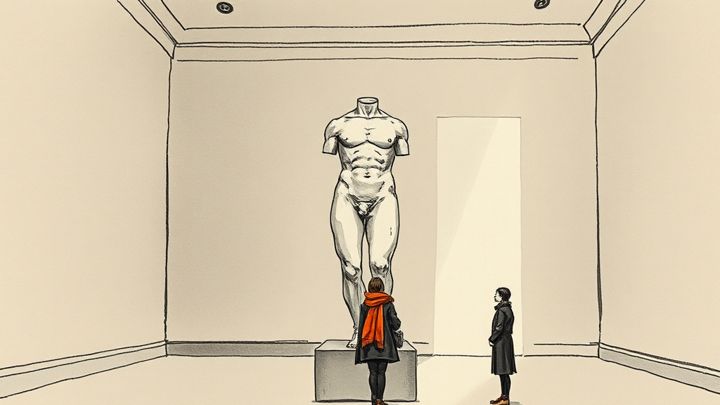
On AI No tool can change your life for you, which is the one thing the headless torso asks.

Rilke · Gardner · Shklovsky

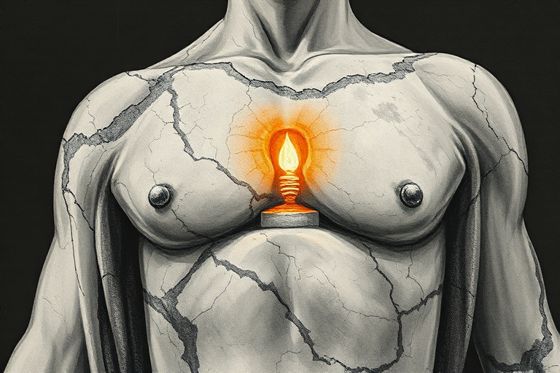
The chest of a headless marble statue glowing softly from within
Rilke, “Archaic Torso of Apollo”

↺ and back to week 1’s problems, this time with practices in hand

What we will Watch and Read and Think about

From the Zhuangzi to now.

Plenty of readings and films to choose from per topic but none absolutely mandatory because our conversation will be the most important part.

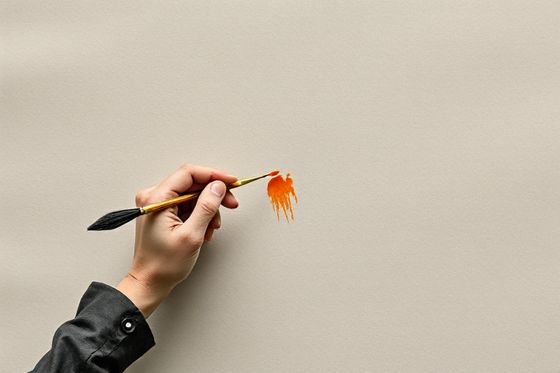
  • A hand making one small orange brushstroke on a blank canvas

    Week 1 · Jan 112024

    “Why A.I. Isn't Going to Make Art”

    Ted Chiang

    A piece of writing is thousands of small choices, and Chiang asks what is left of it once a computer makes them for you.

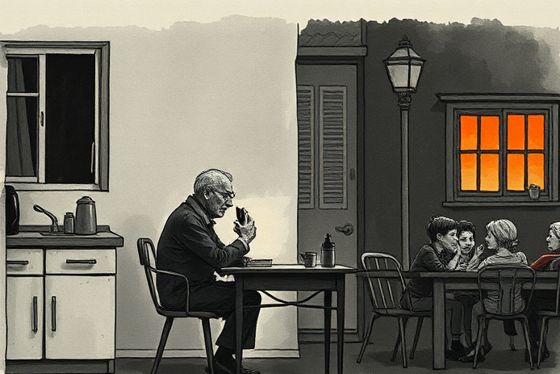
  • An old man talking to his phone at a kitchen table at night, a family gathered at a lit table across the room

    Week 1 · Jan 112025

    “A.I. Is About to Solve Loneliness. That's a Problem”

    Paul Bloom

    Loneliness hurts, and the hurt is what sends us back to each other. What happens when a chatbot takes it away?

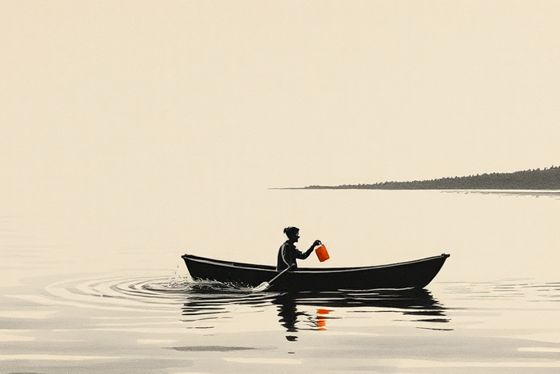
  • A person in a small rowboat at dusk bailing water out with a bucket while more pours in over the side

    Week 1 · Jan 112021

    Four Thousand Weeks

    Oliver Burkeman

    Eighty years is about four thousand weeks, and every system for getting more done fills them faster.

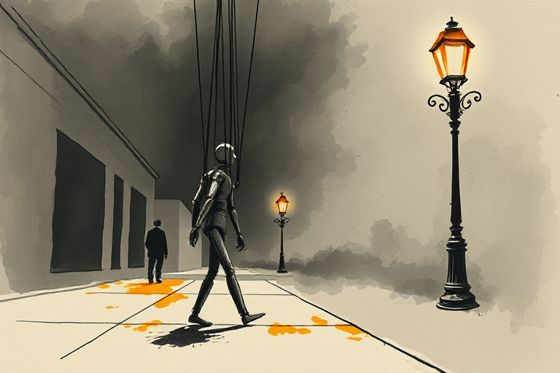
  • A wooden marionette walking a city street at night, its shadow a person with no strings

    Week 1 · Jan 112020

    “You Are Now Remotely Controlled”

    Shoshana Zuboff

    A market that sells predictions of what you will do next, and then nudges you toward them.

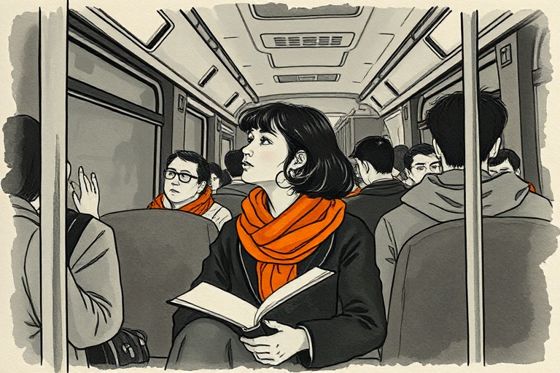
  • A woman reading on a night bus, the other passengers sketched as if she were imagining their lives

    Week 1 · Jan 112019

    “Fascinated to Presume”

    Zadie Smith

    In defence of fiction: the right to imagine a life you are not living.

  • A long library reading room where readers bent over books give way, table by table, to readers at glowing screens

    Week 1 · Jan 112026

    “Large-Language Models as a Cognitive Virus”

    Ricard Solé and colleagues

    Nine scientists model AI dependence spreading like an epidemic, with a tipping point that is easier to cross than to come back from.

  • Two people on a stone bench under a bare tree, one asking a question with an open hand

    Week 2 · Jan 182025

    Open Socrates

    Agnes Callard

    What the Socratic life asks of you now: someone in the room who can refute you.

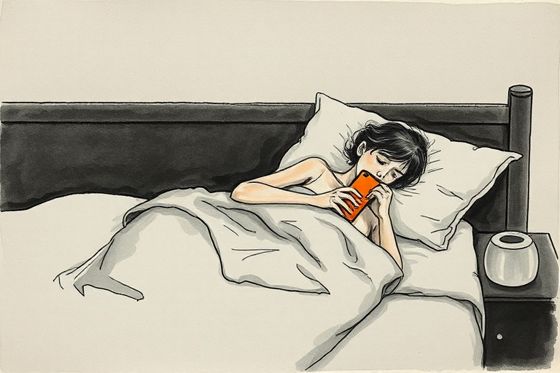
  • A person lying awake in bed talking to a glowing phone on the pillow

    Week 2 · Jan 182026

    Artificial Intimacy

    Sherry Turkle

    What do we become when a computer gives us the feeling of being heard with no one listening?

  • In a desert, a camel kneeling under a load, a lion on a dune above it and a child’s footprints leading away

    Week 3 · Jan 251883

    “On the Three Metamorphoses”

    Friedrich Nietzsche

    “What is heavy? so asketh the load-bearing spirit,” and kneels like a camel to be laden. (trans. Thomas Common)

  • A lone climber with bare hands high on a granite arête above a forested valley and a winding river

    Week 3 · Jan 252018

    Free Solo

    Jimmy Chin and Elizabeth Chai Vasarhelyi

    Alex Honnold climbs El Capitan without a rope, and the crew filming him worries that the camera is part of the danger.

  • A man walking a forked path across a misty heath toward a lit farmhouse

    Week 4 · Feb 11843

    Either/Or

    Søren Kierkegaard

    Two lives, two bundles of papers, and an editor who won't tell you which to choose.

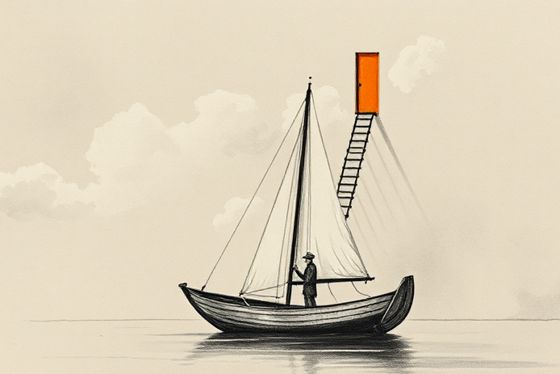
  • A small sailboat on a calm sea, a ladder rising beside it to an ember-orange door in the sky

    Week 4 · Feb 11998

    The Truman Show

    Peter Weir

    A whole life arranged by someone who profits from predicting it, until the man inside it finds the door.

  • A country path toward a village church tower at dusk, a bench under an oak beside it

    Week 5 · Feb 81955

    “Memorial Address”

    Martin Heidegger

    Use the devices, and stay free enough of them to let them go: yes and no at once.

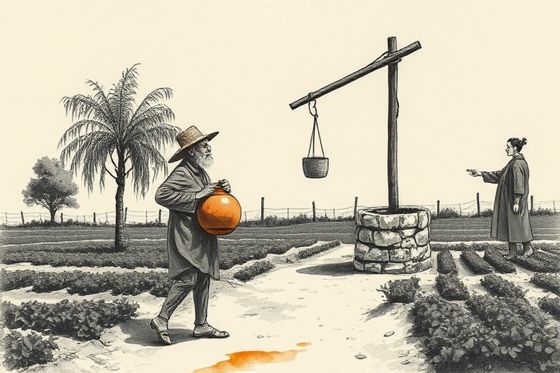
  • An old gardener carrying an ember-orange water jar past a well-sweep, a young man with a topknot pointing at the lever

    Week 5 · Feb 8c. 3rd c. BCE

    Zhuangzi, ch. 12

    The Zhuangzi, outer chapters

    A gardener refuses the well-sweep, because devices bring device-business and device-business a machine-heart.

  • A woman typing with her eyes closed, a walking cane leaning by the desk

    Week 6 · Feb 151945

    Phenomenology of Perception

    Maurice Merleau-Ponty

    The typist's fingers know where the keys are and the blind man feels the street at the tip of his stick, and neither one of them is thinking about it.

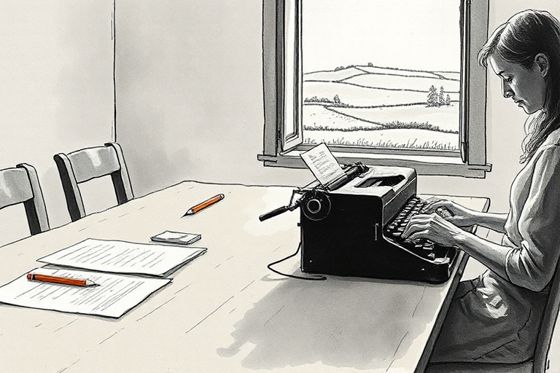
  • A farmhouse table with handwritten pages at one end and hands at a typewriter at the other

    Week 6 · Feb 151987

    “Why I Am Not Going to Buy a Computer”

    Wendell Berry

    A Kentucky farmer explains why he is keeping his pencil, gets a pile of angry letters for it, and answers them.

  • Two young fish swimming past an older fish in sunlit water

    Week 7 · Feb 222005

    “This Is Water”

    David Foster Wallace

    An older fish asks two young fish how the water is, and Wallace builds a whole commencement speech out of why they can't answer.

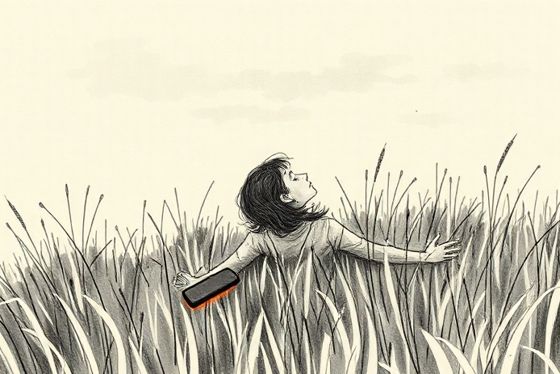
  • A girl lying back in long summer grass looking up at the sky, a phone glowing beside her hand

    Week 7 · Feb 222025

    “Some Notes on Mediated Time”

    Zadie Smith

    Smith remembers how slowly time moved when she was a child and asks what has been lost now that a phone camera catches everyone.

  • The full moon reflected inside a single dewdrop on a blade of grass

    Week 8 · Mar 11233

    Genjōkōan

    Dōgen

    The whole moon fits in one drop of dew on the grass.

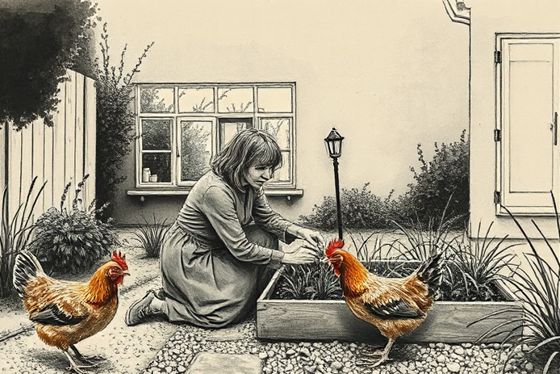
  • A woman kneeling at a raised garden bed pulling weeds, two hens on the gravel path beside her

    Week 8 · Mar 12026

    “Do you really want a ‘slow life?’”

    RAYON, a newsletter

    Twenty-three months without a smartphone, an evening of weeding, hens and a book, and the admission that most of slowness is just boredom.

  • A student's desk at night with an unfinished geometry drawing, a pencil and a lamp

    Week 9 · Mar 81942

    “Reflections on the Right Use of School Studies”

    Simone Weil

    Attention trained on a geometry problem becomes the power to ask someone: what are you going through?

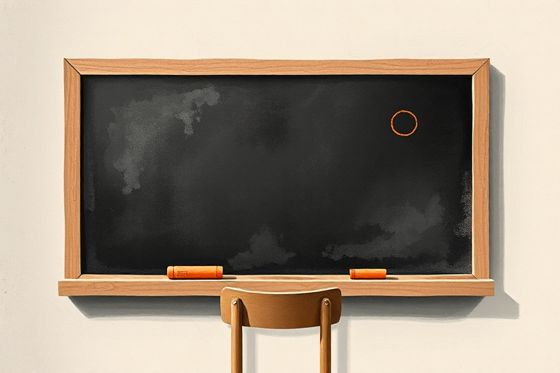
  • A classroom blackboard wiped almost clean, one small chalk circle left in a corner

    Week 9 · Mar 82026

    “The Id, the Ego and the Superintelligence”

    Simon Critchley

    Critchley on why philosophy matters more now that computers remember everything and still can't judge.

  • The chest of a headless marble statue glowing softly from within

    Week 10 · Mar 151908

    “Archaic Torso of Apollo”

    Rainer Maria Rilke

    A statue with no head somehow looks straight at you, and the poem's last line tells you to change your life.

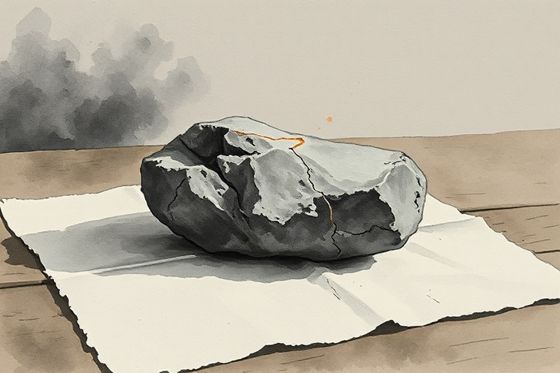
  • An ordinary grey stone on a white cloth, lit so that every crack stands out

    Week 10 · Mar 151917

    “Art as Device”

    Viktor Shklovsky

    Habit eats up our lives, Shklovsky says, and art is there to give back the feel of things, to make the stone stony.

What we will read: leave your email for the free first session and the readings will come into focus.

For the mind does not require filling like a bottle, but rather, like wood, it only requires kindling to create in it an impulse to think independently and an ardent desire for the truth.

Plutarch

IISeminar Structure

A place to work out along with other people how to live authentically in a technologically dominated world.

1

Read the thinkers; watch the films

Not mandatory, but they will deepen your understanding profoundly.

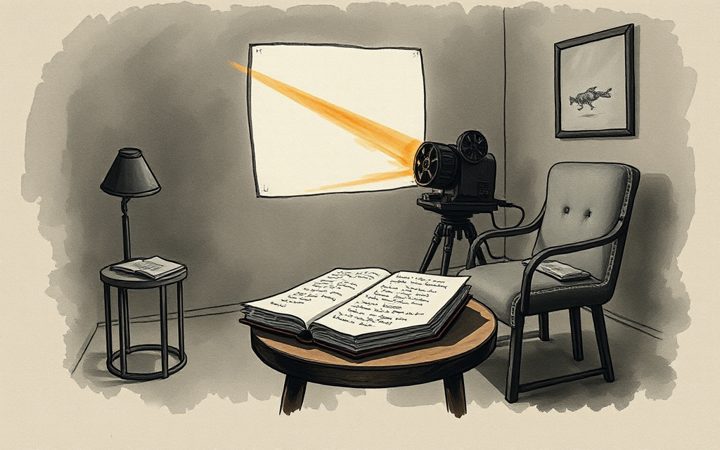
An open book with pencil notes on a small table beside an armchair, while an old film projector throws an orange beam onto the wall
2

Do the exercise for the week

Each session offers you an exercise to practice built on that week's readings.

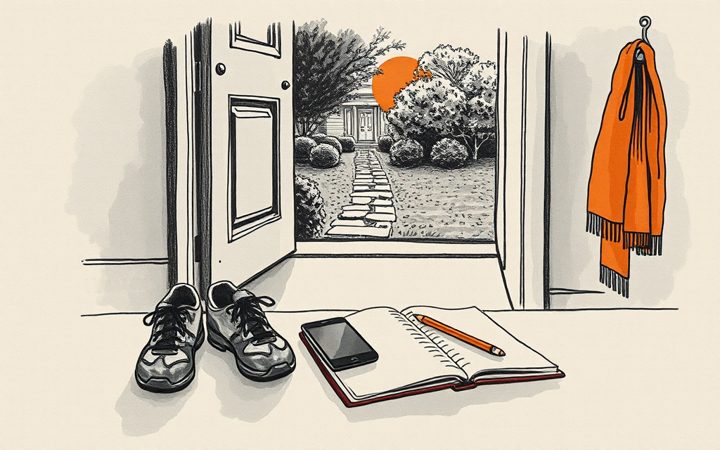
Walking shoes by an open front door at dawn, a phone and an open notebook left on the floor, an orange scarf on a hook
3

Discuss on Sunday the effect of the exercise and how to integrate the ideas

Sunday afternoons at 2:00 pm Central, in groups of five.

A laptop on a kitchen table open to a video call, an orange cup of coffee and an open notebook beside it

On telling his wife he's going out to buy an envelope

Oh, she says, well, you're not a poor man. You know, why don't you go online and buy a hundred envelopes and put them in the closet? And so I pretend not to hear her. And go out to get an envelope because I'm going to have a hell of a good time in the process of buying one envelope. I meet a lot of people. And see some great looking babies. And a fire engine goes by. And I give them the thumbs up. And I'll ask a woman what kind of dog that is. And, and I don't know.

The moral of the story is — we're here on Earth to fart around. And, of course, the computers will do us out of that. And what the computer people don't realize, or they don't care, is we're dancing animals. You know, we love to move around. And it's like we're not supposed to dance anymore.

Kurt Vonnegut

IIIThe hearth · every Monday, 7:00 pm Central

Ninety minutes with a hard thinker and fourteen other people who care enough to show up.

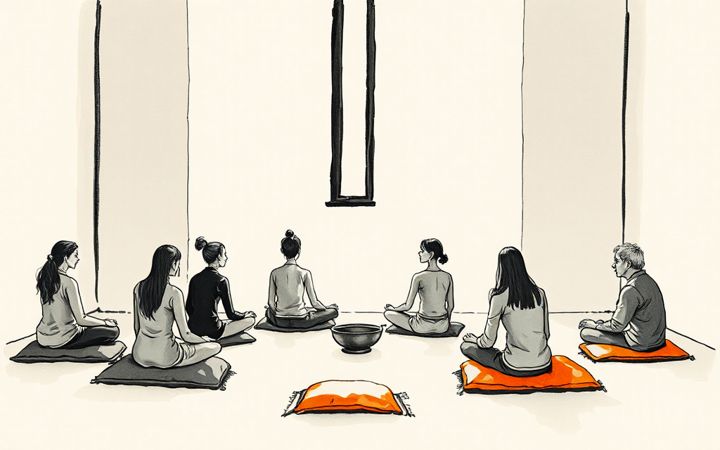
Each meeting is shaped like a seminar, neither a one-person lecture nor a wide-open book-club discussion, and begins with five minutes of silence for each of us to gather our aspirations.

With attendance capped at fifteen members, everyone will have a voice.

Can't make it live? Every session will be recorded for other paid members with notes posted on a shared document.

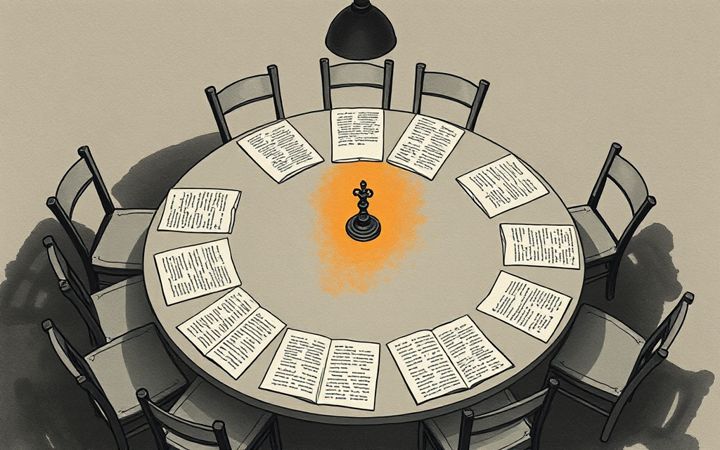
Seen from above, a round table at night with mismatched chairs, annotated pages at every place and three lamps
The room · fifteen chairs, one empty
7:00 · five minutes

The silence

Phones face down and no talking, for about as long as it takes to notice the day you brought in with you.

7:05 · ten minutes

The life

I’ll begin with a short talk on the writer, where they were when they wrote it and what the difficulty in their prose is doing to you.

7:15 · thirty minutes

The margins

We read the key passages together in a shared doc, in silence, writing in the margins, and watch the other fourteen think in real time.

7:45 · forty-five minutes

Small groups

Small groups, then the whole group: first what the text does, then what it asks of you, which is the question we're really here for. You leave with the week's exercise.


The monthly deadline

One practice and one short essay, due on the 1st.

The seminar borrows a distinction from Agnes Callard. Ambition chases goals inside values you already hold; aspiration is how you come to hold a value you can't fully see yet, by modeling yourself on the person you're trying to become, which at first feels a lot like pretending. Callard thinks this emulation, modeling your actions on people you admire, is how the change happens, and the monthly practice of writing an essay will act as the aspiration we keep aglow for a month.

The practice

Something you do every day for a month

Hadot called these spiritual exercises. You pick one of the many practices offered, keep it for a month and log it in the forum.

The essay

Five hundred words on what it did to you

An essay in Montaigne's sense, an attempt: what the practice resisted and what it changed in you. Not a book report. After a month we will read each other's essays and leave comments in the margins.

A paper wall calendar hung on a string, its grid blank except for one day filled in orange, a pencil beside it
The 1st · marked

Firewood becomes ash, and it does not become firewood again. Yet do not suppose that the ash is after and the firewood before.

Dōgen

Is it for you?

Then the Monday readings are the main event: three texts a week, cut down, read slowly in a room that helps, and odds are that by week three you'll have picked up a practice you didn't plan on.

Two worn armchairs facing a stone fireplace, a book left open on the floor between them
The hearth · dealing with difficulty feels better in the warm fire of company

You should join if

  • You want to read the hard ones with company, and you'd rather be confused by Nietzsche than reassured by a summary.
  • You want a practice that will change you and desire accountability to others as well as yourself.
  • You highly suspect that the frictionless life is a devil's bargain and are ready to test that suspicion on yourself.
  • You write, or want to, and need a deadline with real living breathing people to hold you accountable.

This might not be for you if

  • You want the ideas neatly delivered, when the whole premise here is that the valuable part can't be delivered as content.
  • You want a philosophy that resolves, and these writers were picked because theirs don't.
  • You want AI to write the essay, or you refuse to discuss it at all.

IVEmbers · membership

One season of ten weeks, with everything kept in the library for a year.

  • Ten live readings, 90 minutes each, recorded, with fifteen members at most
  • A lesson plan and an annotated text for every reading
  • Ten Sunday reports, two hours each, in groups of five and then all together
  • The monthly essay, due on the 1st and read together
  • The community forum, open all week
  • One call with me to set your practice for the season
Season pass
$395per season

Your rate never goes up, the first week (both meetings) is free, and if it isn't a fit thirty days in you get a full refund, no questions asked.

Sign up for the free week
ItemSpec
01 Monday readings10 live co-readings · 90 min · 7 pm Central · 8 pm Eastern · 5 pm Pacific · 2 am Rome · recorded · 15 seats
the life · the margins · small groups
02 Sunday reports10 live meetings · 2 hours · 2 pm Central · 3 pm Eastern · noon Pacific · 9 pm Rome · not recorded
groups of five · everyone · one sentence
03 The deadlineEssay by the 1st · read together
04 The forumPractices, drafts, essays

Questions

Frequently asked

Do I need to have read any of these writers?

No. Each week has assigned readings, cut down and linked in full; you'll obviously get more out of each session if you've read them, but you don't need to have finished everything to take part: we read the key passages together on the call.

Do I need any experience with meditation?

No. Every meeting opens with five minutes of silence, and you don't have to be a Buddhist or anything else to sit. Zen is one of the traditions we read, in week eight.

Is this a course or a club?

A club with a syllabus: no grades and no exams, only a deadline and some people who'll notice whether you kept it.

What if I miss a meeting?

Monday readings are recorded, with the slides as a lesson plan and the annotated text open all week for your own margin notes. Sunday reports aren't recorded, because people talk about their own lives; if you miss one, bring both weeks' exercises to the next.

Where does it take place?

Wherever you live. Both meetings happen on a video call, the reading in a shared doc, and the rest happens in your own week, at your own desk.

How big is the group?

Fifteen members at most, so everyone talks and everyone's margin notes get read. When the seats are taken, enrollment closes.

What is the time zone?

Central time, Austin. Monday at 7:00 pm Central is 8:00 pm in New York and 2:00 am in Rome, which I feel personally, since I live part of the year in Sicily. Sunday at 2:00 pm Central is 3:00 pm in New York and 9:00 pm in Rome. In the last week, after the US clocks change, Rome is an hour earlier. If the room fills with Europeans, a second slot will follow.

What is your position on AI?

It's the first week's subject and the reason the seminar exists. I use these tools daily for research and keep them out of the margins and the essay, and all season we ask what they offer to take off your hands and whether you'd rather keep it.

Why these thinkers?

Every reading has to show what technology changes about a life, or train something a computer can't do for you. Week one has six short pieces, one per problem, and every week after has three.

What if it isn't for me?

The first week is free, both meetings, and after that you have thirty days to ask for a full refund, no questions asked.

About the host

Hey, I'm Krzysztof Piekarski, and I love learning, living, and cultivating character by reading and teaching the world's best thinkers and writers. On my best days I try to walk the walk.

I teach rhetoric at the University of Texas at Austin, where every class begins in silence. My doctorate was on Buddhist philosophy in the work of David Foster Wallace. I've sat with a Zen community in Austin for years, and along with Dale Wright, I write Fire Philosophy, the newsletter this seminar grows out of.

How to Live in the Age of AI is built from the things I can't seem to do alone: reading the hard thinkers slowly and deliberately. Thinking and discussing life and how to best live it does wonders for me, and I think it can inspire everyone who also wants more friction in the right places to turn their lives from kindling into a fierce fire.

Krzysztof · Fire Philosophy on Substack · Austin

Read, sit and write, together

Ten weeks on how to live in the age of AI.

Nietzsche said the world is justified only as an aesthetic phenomenon. If computers really do take over the making of a living, making your life a work of art may be the job that's left. The first week is free.

Jan 11 – Mar 21, 2027Fifteen seatsSign up with your email above