About
Krzysztof Piekarski
I teach rhetoric at UT Austin and trade options. People assume those are two lives. They are the same one.
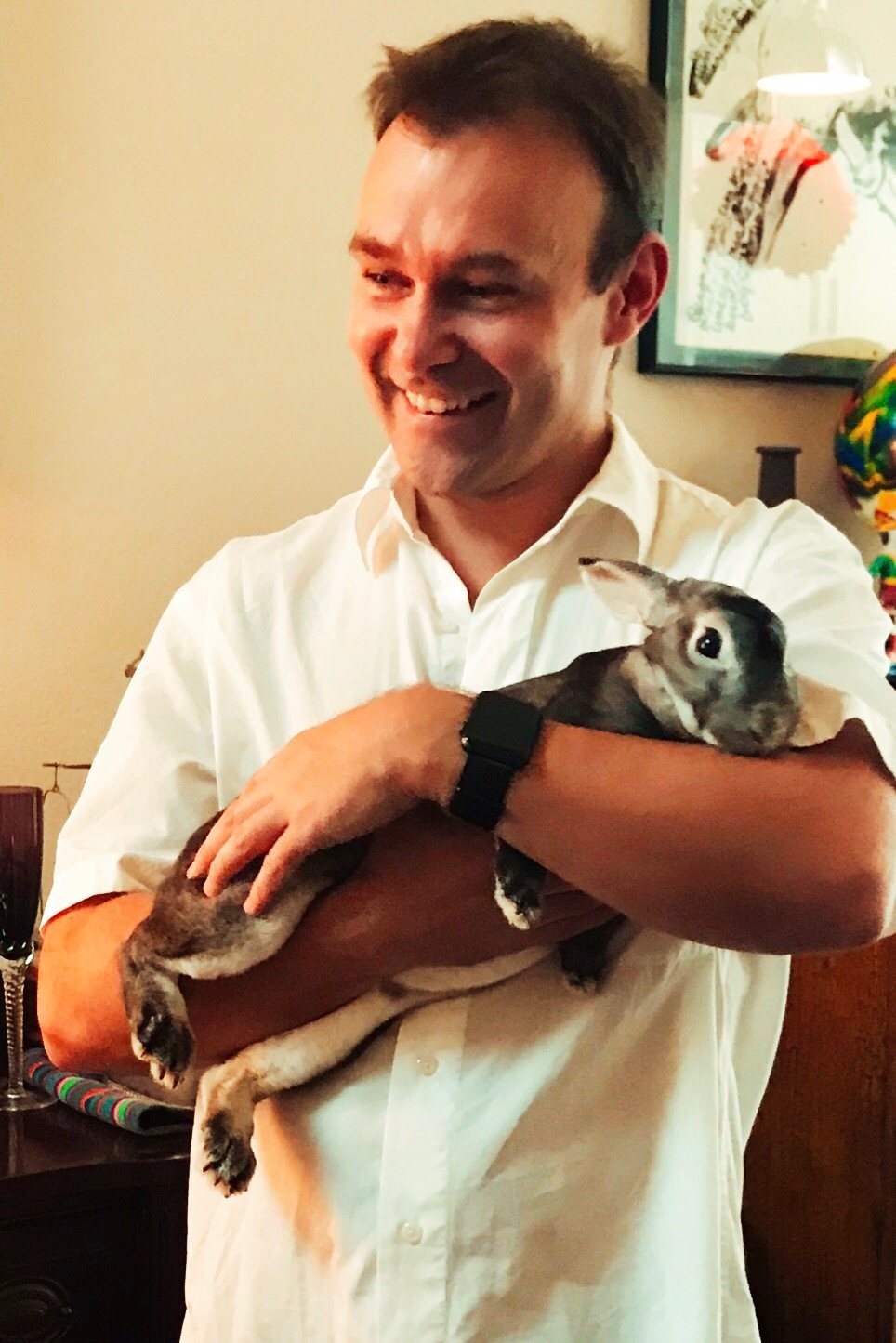
I live in Austin, Texas. I hold a PhD in English Literature from the University of Texas at Austin, where I wrote my dissertation on Buddhist Philosophy in the Work of David Foster Wallace. The argument was that Wallace does not merely quote Buddhism; his fiction works out a Buddhist account of attention and selfhood, and pays the price for it on the page.
That question has followed me since. What attention actually is, what it costs, and why nobody wants to pay.
What I do now
I teach rhetoric and writing at UT Austin. My courses run from a first-year rhetoric class built around food to a seminar on Zen texts read as rhetorical artifacts. More on the teaching page.
With Dale Wright, Professor Emeritus of Religious Studies at Occidental College, I write Fire Philosophy. We keep circling one disagreement: Nietzsche says become who you are, Zen says there is nobody there to become, and neither of them is obviously wrong. I am also writing a book about difficulty, which you can read about on the writing page.
On the market side, I co-host Wall Street Wildlife with Luke Hallard. He is Badger; I am Monkey. We talk about options and equities without the finance-bro theater, and I teach the mechanics in more depth at WSW Options University. The podcast page has the details.
Why philosophy and markets are the same job
Both are disciplines of judgment under uncertainty. A reader deciding what a difficult sentence means and an investor deciding what a difficult quarter means are performing the same act: holding a position provisionally, staying open to being wrong, and resisting the urge to resolve too early. Nietzsche called it the strength to keep a question open. Traders call it not marrying your thesis.
The failure mode is identical too. You stop looking, and start defending.
Things I am actually interested in
- Nietzsche and Zen as one problem. Self-overcoming without a self to overcome. This is the spine of most of my writing.
- Attention as a skill you can lose. Weil, Murdoch, Wallace, and Zen all arrive at attention as the moral act. Then the phone arrives.
- Difficulty as the thing worth keeping. When a machine can produce a competent paragraph on anything, the struggle to produce your own becomes the only part that changes you.
- Pynchon. Chiefly because paranoia is an epistemology, and a funny one.
Elsewhere
- Fire Philosophy — the Substack, with Dale Wright
- Wall Street Wildlife — podcast and YouTube channel
- WSW Options University — the options course
- The Last Book Shelf — a reading app built around the fact that you will not finish everything